
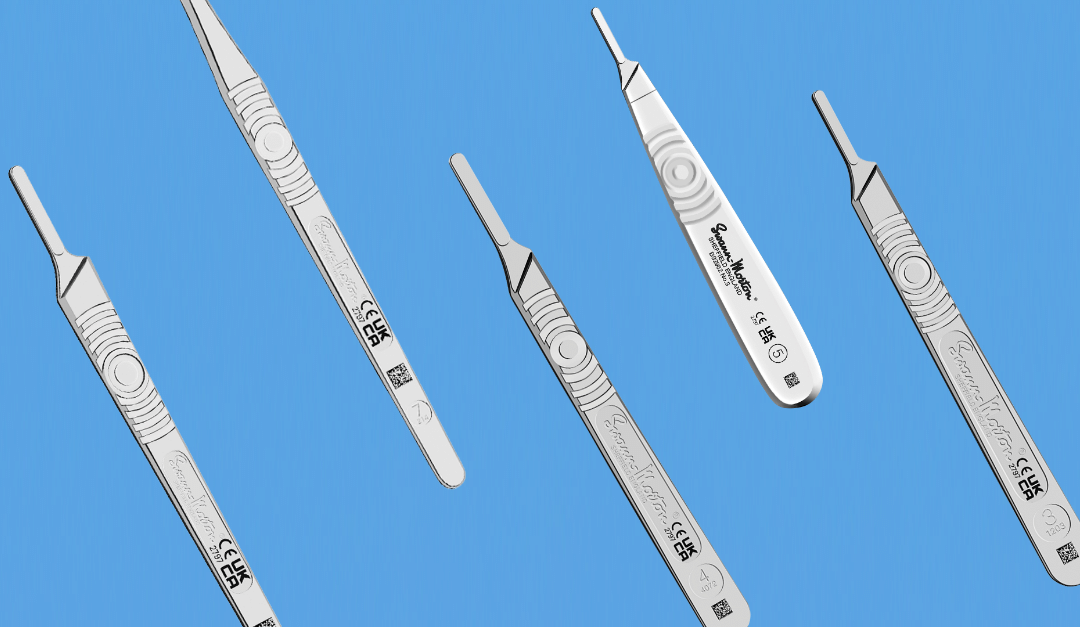
A precise incision requires not just a sharp blade, but a properly fitted surgical handle. Selecting the correct handle size—and ensuring the blade and handle are manufactured to the appropriate specifications—helps maintain secure blade fit, precision control, and safe, reliable performance throughout the procedure.
What Surgical Scalpel Handle Fits Each Blade Size?
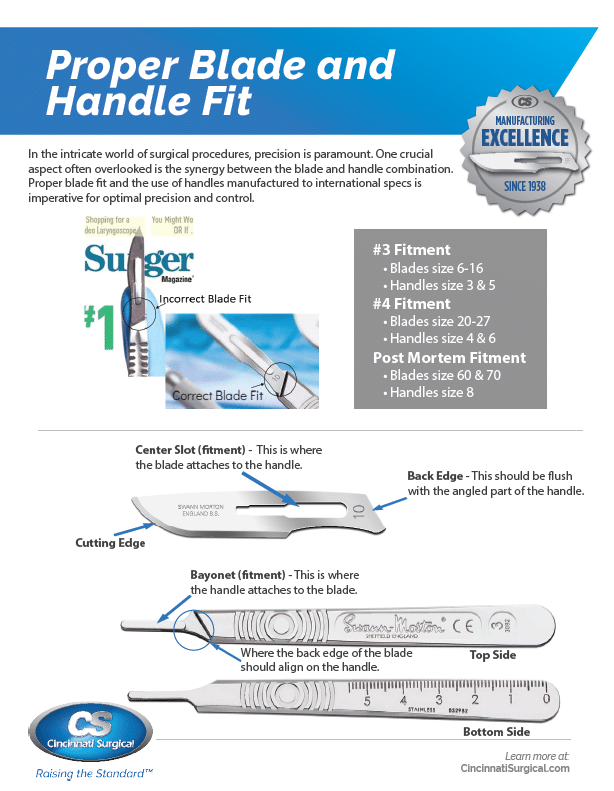
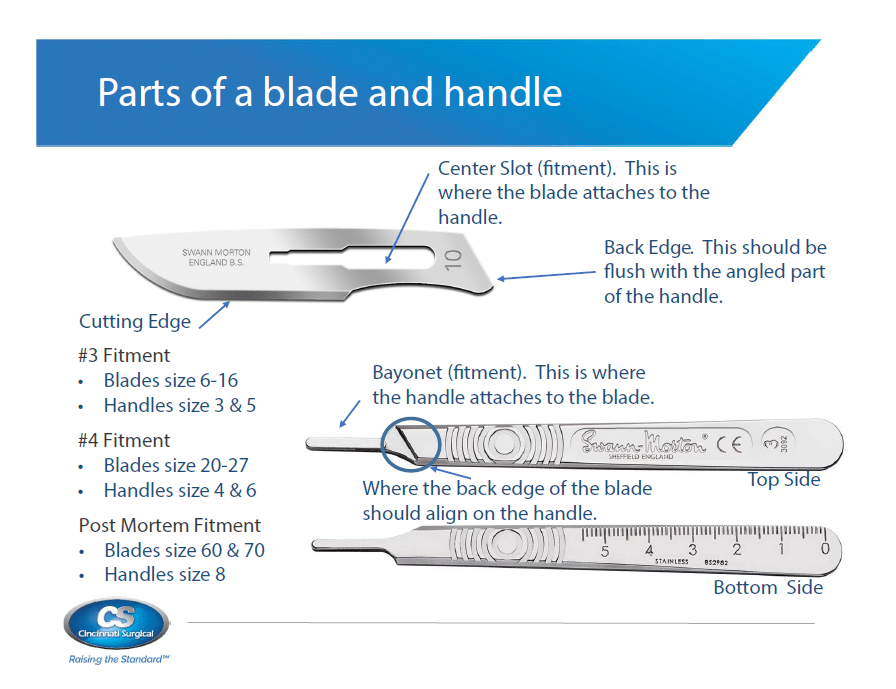
Choosing the right surgical scalpel handle starts with the blade’s fitment. Standard No. 3 handles accommodate smaller blade shapes, while No. 4 handles accommodate larger blade shapes. Swann-Morton identifies No. 3 fitment for blade sizes 6–16 and No. 4 fitment for blade sizes 18–36.
| Blade Sizes | Compatible Surgical Handles |
| 6–16 | Stainless Size 3 Handle (073S); Ergonomic Handle (07SM5B-E) |
| 18–27 | Stainless Size 4 Handle (074S); Ergonomic Handle (07SM6B-E) |
| 60 and 70 | No. 8 handles – Pathology and Postmortem Handle (0780SM-S); Ergonomic Handle (0780SM-E) |
| PM40 and PM40B | Pathology and Post-mortem Handle (07PM); Pathology and Postmortem Handle (07PMH) |
| Mini blade sizes 61–69 | Miniature Handles |
| 01C cervical biopsy blade | Major Handle (07L) |
Blade size is only one part of compatibility. Proper fit also depends on the handle being manufactured to international ISO 13485 specifications for consistent fit.
Why Does Blade-and-Handle Fit Matter?
The correct blade number does not guarantee the correct fit. A handle that does not meet the applicable fitment specifications may allow excessive blade movement or create a connection that is too loose or too tight.
Swann-Morton’s No. 3 and No. 4 fitting handles are manufactured in accordance with BS 2982 and BS EN 27740, standards that define requirements for surgical scalpels with detachable blades and their fitting dimensions.
A properly fitted blade and handle support:
- Secure blade seating
- Appropriate stability during use
- Consistent tactile feedback
- Greater control during incision
This makes scalpel blade and handle compatibility a matter of both size and precision fit—not simply matching numbers. The manufacturing quality of the handle plays a significant role in performance.
Why Do Blades 10, 11, and 15 Use a No. 3 Handle?
Blades 10, 11, and 15 fall within the No. 3 fitment range and are compatible with No. 3 handles. The standard No. 3 handle accommodates blade shapes including 6, 9, 10, 11, 12, 14, 15, and 16, among others.
Handle selection can then be based on factors such as length, grip design, and procedural preference.
When Should You Use a No. 4 Handle?
Larger blades, including No. 22, use the No. 4 fitment. The standard No. 4 handle is compatible with blade sizes 18 through 27 and 36.
No. 22 is a larger version of the No. 10 blade and is used where a larger cutting edge is appropriate, including certain surgical, orthopedic, pathology, and large-animal applications.
The distinction between scalpel handle 3 vs. 4 is therefore primarily the blade fitment range:
- No. 3 fitment: Smaller blade sizes
- No. 4 fitment: Larger blade sizes
How Does Handle Ergonomics Affect Surgical Control?
Once blade compatibility is established, handle design becomes another consideration. Handle shape, length, diameter, and surface design can affect grip, tactile feedback, and control.
Swann-Morton offers multiple No. 3 and No. 4 handle designs, including longer handles for additional reach, slimmer and bulbous options, and ergonomically designed handles.
Ergonomic options are available within both fitment ranges, allowing clinicians to select a handle based on the blade being used and the requirements of the procedure.
Why Is a Compatible Blade Remover Important?
For reusable handle systems, blade removal is part of safe sharps handling. A compatible blade remover allows the used blade to be removed without direct handling.
This completes the system:
Select the correct blade → use the properly fitted handle → remove the blade with an appropriate remover → dispose of the sharp according to facility protocol.
Consider the blade, handle, and removal method as components of a complete precision system, rather than independent instruments.
Frequently Asked Questions
What handle fits a No. 10, 11, or 15 blade?
These blades have a No. 3 fitment and are compatible with No. 3 handle options.
What handle fits a No. 22 blade?
A No. 22 blade has a No. 4 fitment and is compatible with No. 4 handle options.
What handle fits a No. 60 blade?
A No. 60 blade has a post-mortem fitment and is compatible with No. 8 handle options.
Is matching the blade number to the handle size enough?
No. Blade size establishes the basic fitment, but proper scalpel blade and handle compatibility also depends on the handle meeting the applicable specifications and providing the intended blade seating and stability. Swann-Morton handles are manufactured to ISO 13485 to ensure a proper fit.
How do I choose between standard and ergonomic handles?
Handle shape, length, grip, and procedural preference can determine the most appropriate option.
Choosing the Right Surgical Scalpel Handle
The right surgical scalpel handle is determined by more than size. Confirm the correct blade fitment, verify that the handle provides the intended precision fit, and consider ergonomics based on the procedure and clinician preference.
Cincinnati Surgical offers Swann-Morton surgical blades and handles with established manufacturing and quality standards. Its surgical blade portfolio includes products manufactured to ISO 13485 specifications, with quality controls that include 200% visual inspection.
For your next instrument tray or handle replacement, ask your preferred distributor for the appropriate Swann-Morton surgical scalpel handle for your blade and application.
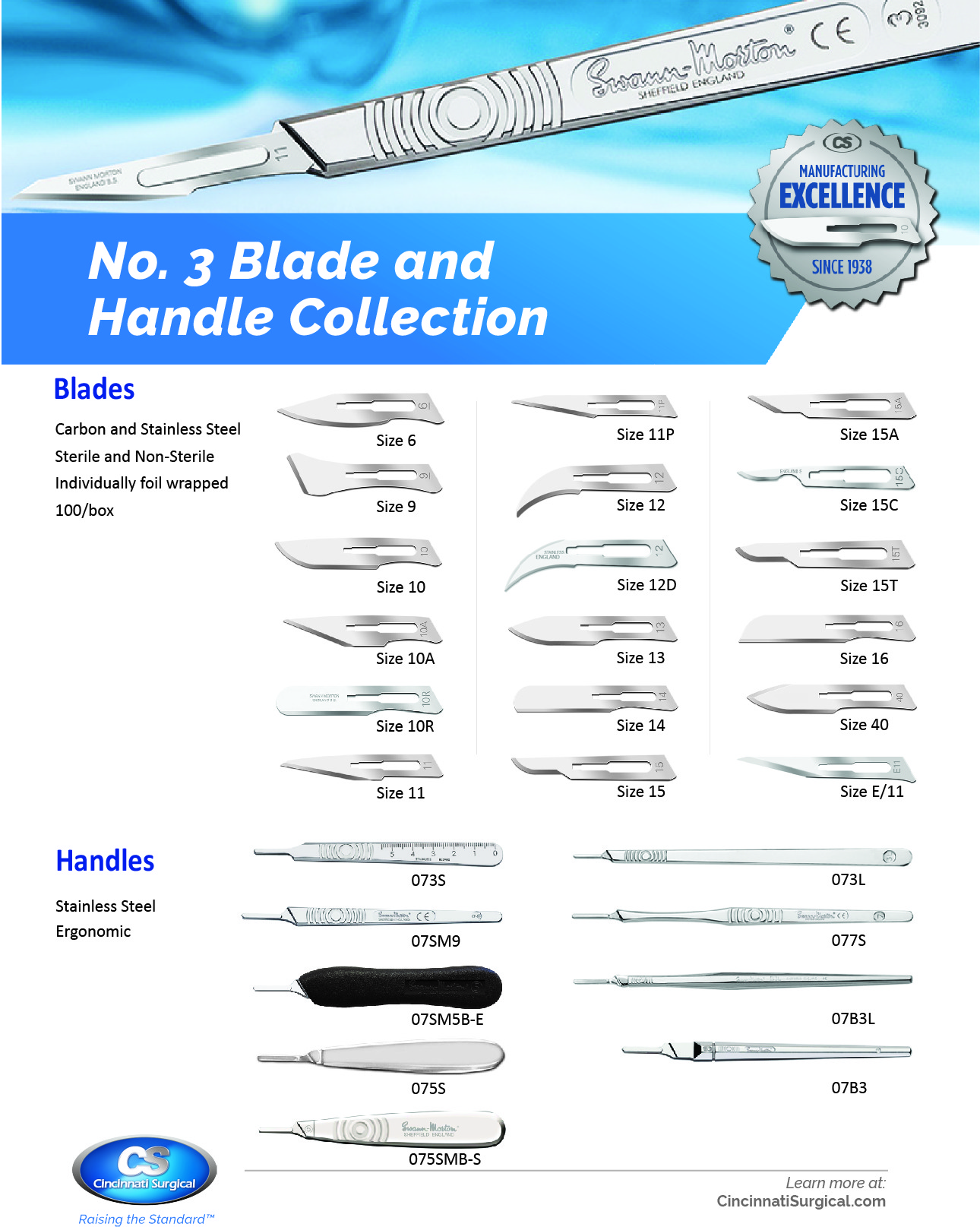
No 3 blades and handles
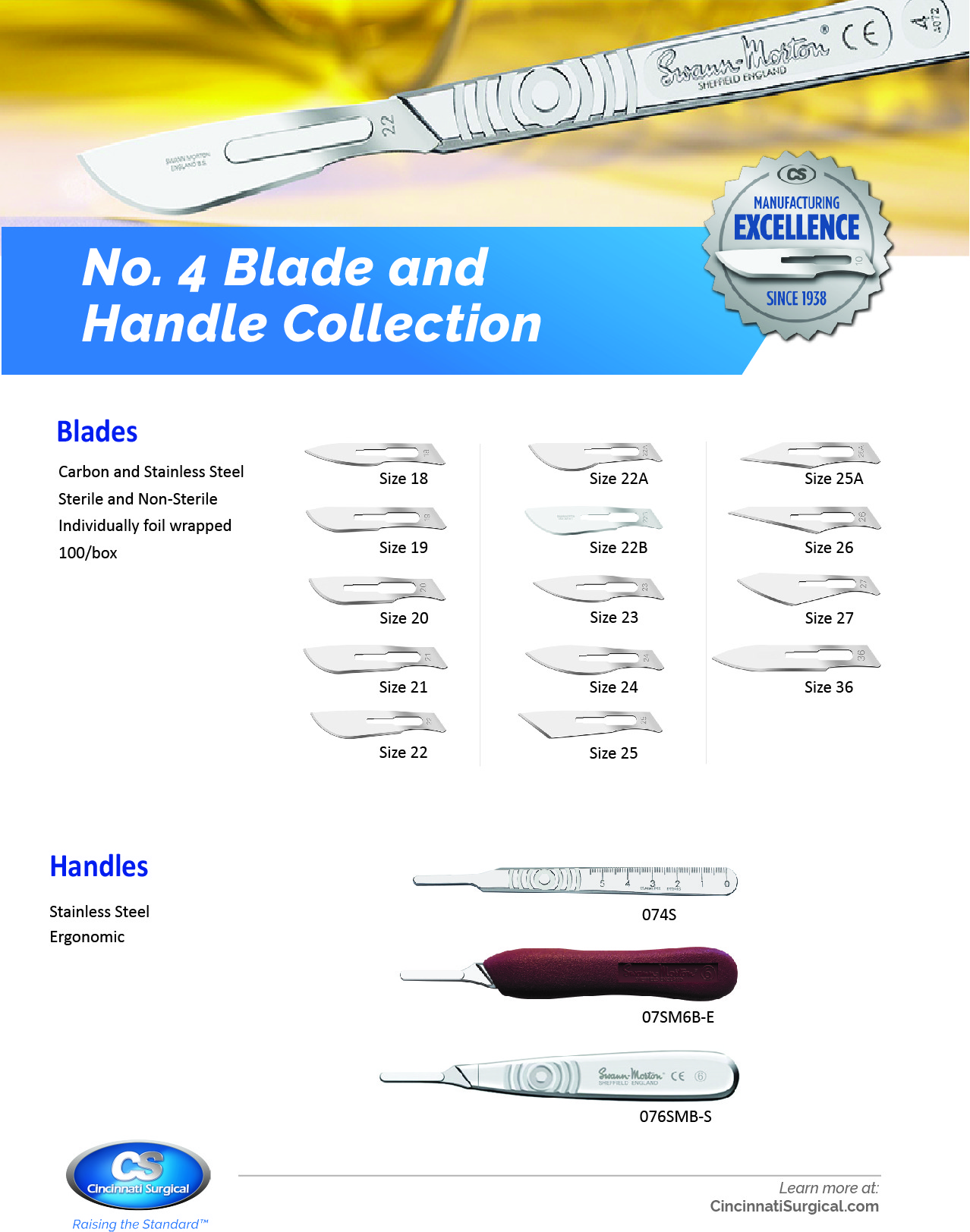
No 4 blades and handles
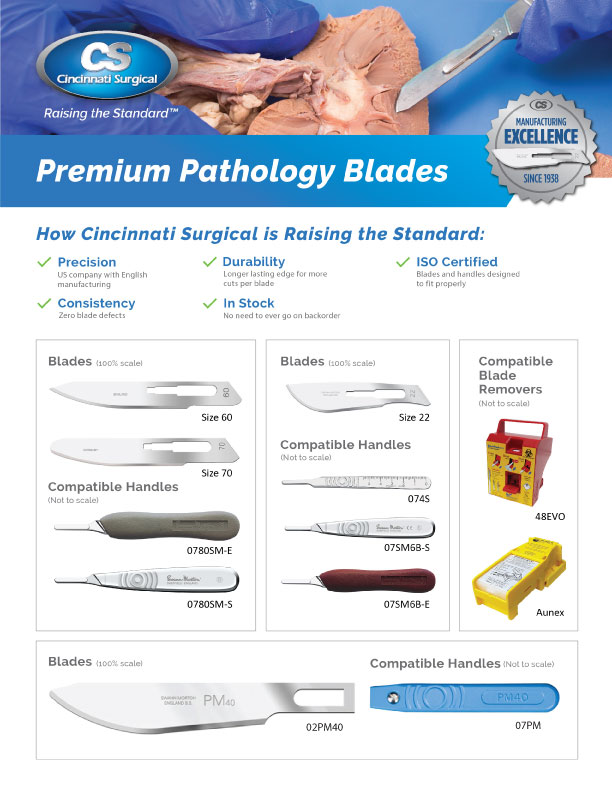
Pathology-Collection
Proper Blade and Handle Fit


Recent Comments